
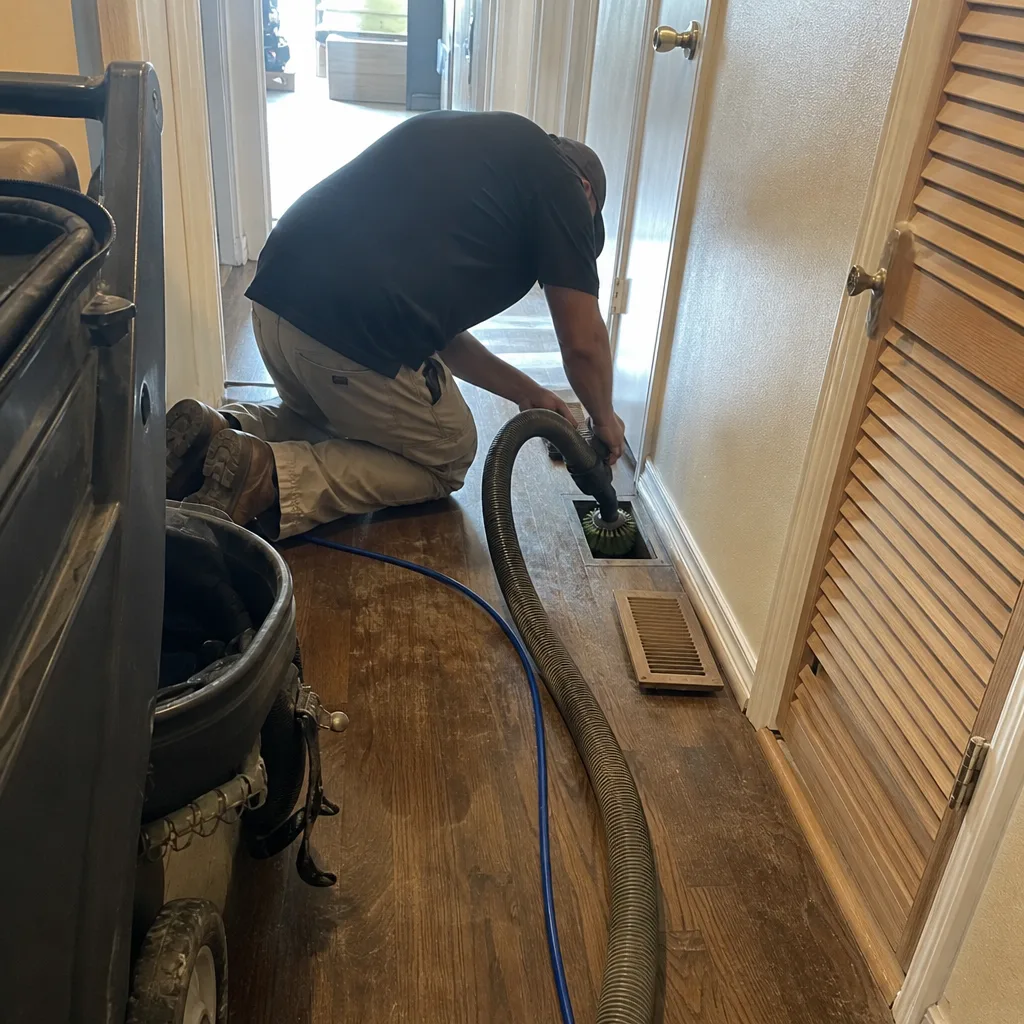
Last updated November 16, 2026
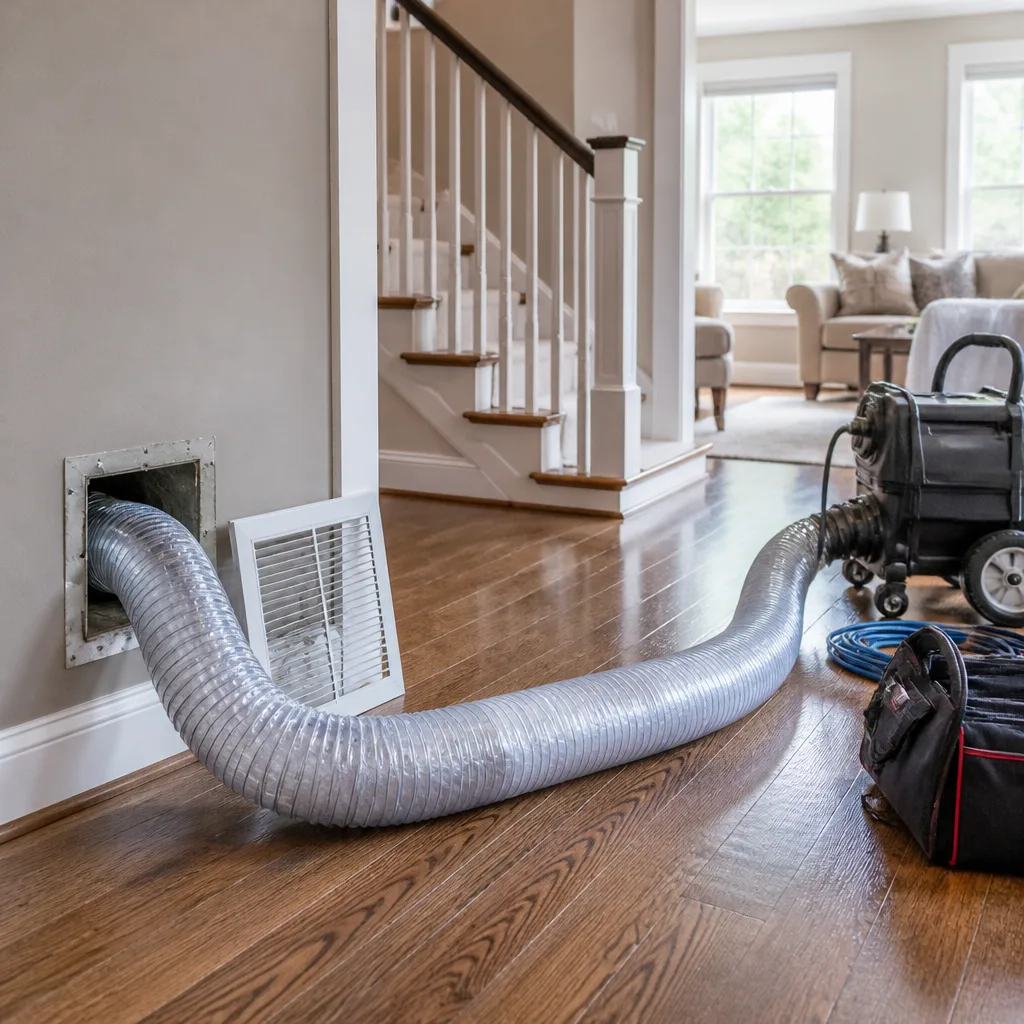 Whole-home duct cleaning
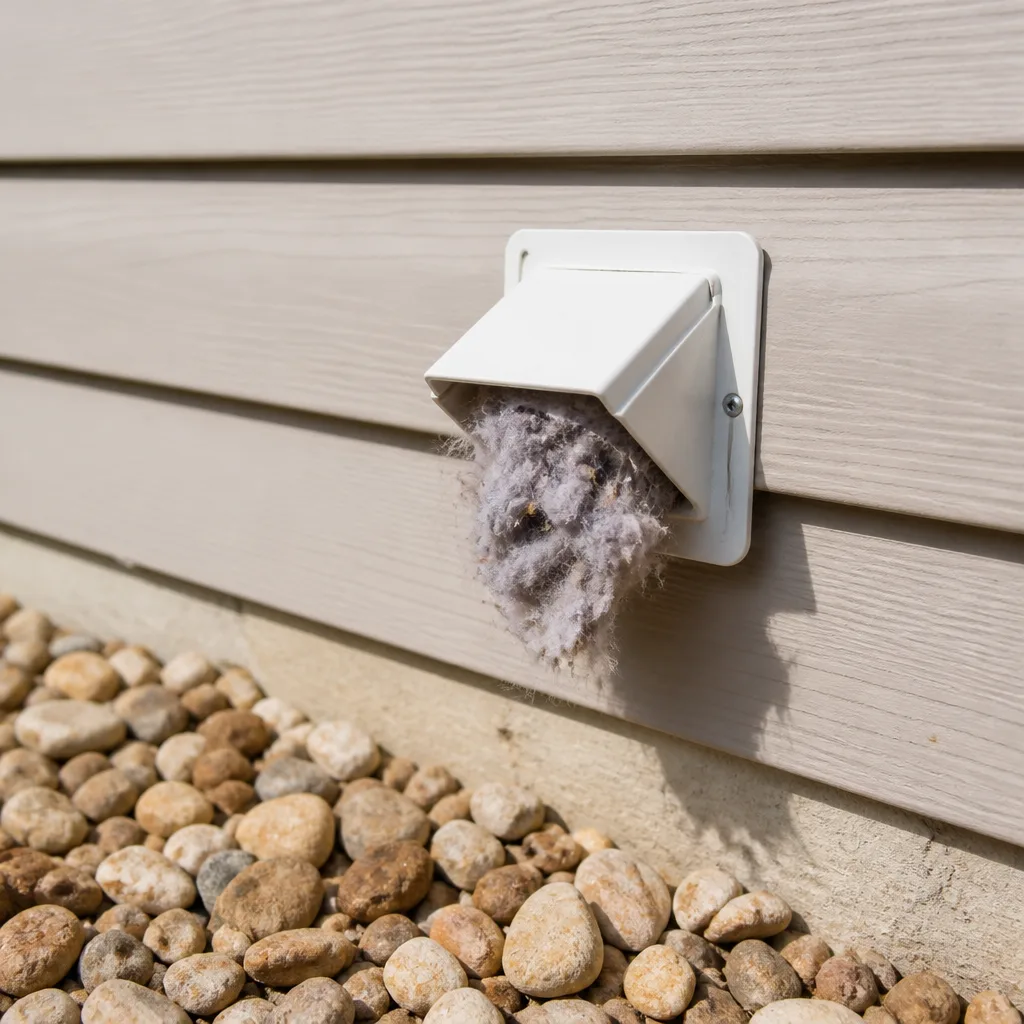 Dryer vent cleaning
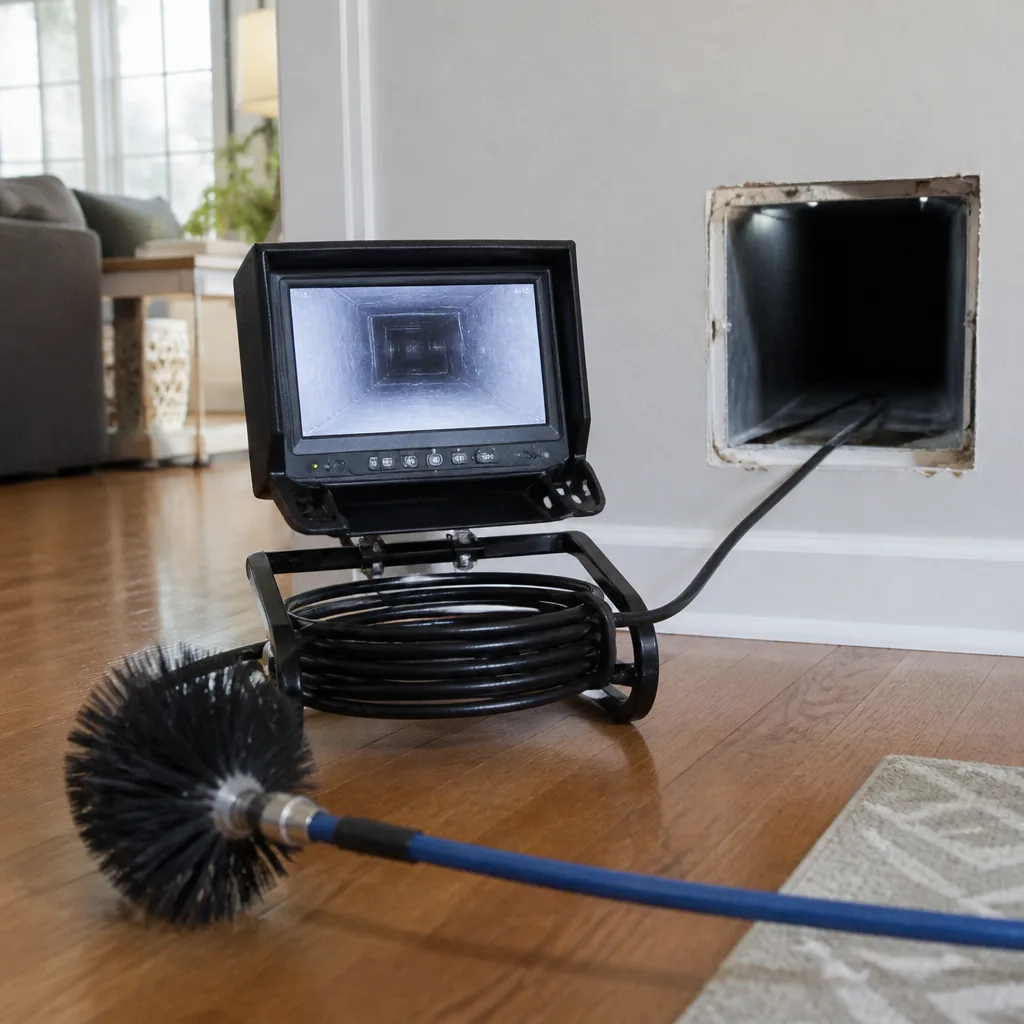 Camera inspection
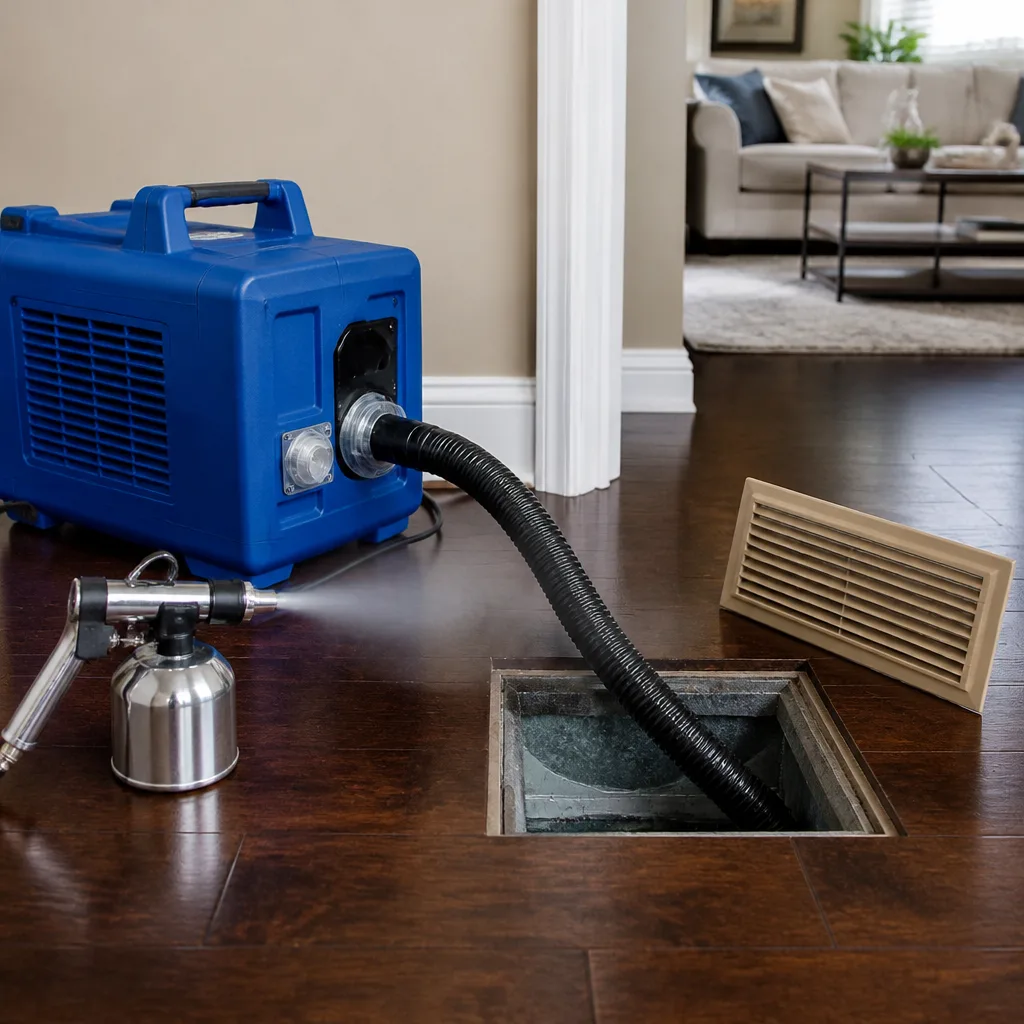 Sanitizing & deodorizing
Whole-system duct and dryer vent check with before-and-after photos - you see exactly what came out of your vents
That "$99 whole-house special" is a bait ad - the real number appears once they are in your hallway, or the "clean" is a shop-vac at the register. We photograph the inside of your ducts before and after instead.
The Complete Guide to Air Duct Cleaning in Beaumont
Most homeowners judge a duct cleaning by what they can see: the vacuum hose in the driveway, the technician’s ladder, the invoice at the end. That’s a mistake. The work that matters happens inside a sealed system under negative pressure, and by the time the equipment is packed up you can’t see any of it. Beaumont makes this harder than most places. Our average relative humidity sits above 75% for most of the year, which means the debris inside your ductwork isn’t just dust sitting still. It’s a damp environment where microbial growth gets a head start that it never gets in a dry climate. This guide walks you through what a real cleaning involves, why containment matters, how to inspect ducts after a storm, and how to verify the job was actually done.
Quick Answer
A thorough air duct cleaning in Beaumont means mechanically agitating the entire duct system with a rotary brush while the whole system is held under negative pressure and sealed off, then capturing the dislodged debris in a HEPA-filtered unit rather than pushing it into your living space. Surface air-washing alone doesn’t clean a humid-climate duct system, because it loosens debris without removing it. The difference between a real cleaning and a cosmetic one comes down to three things: mechanical agitation, whole-system containment, and before-and-after documentation.
Styles & brands we work with
- Whole-home duct cleaning
- Dryer vent cleaning
- Camera inspection
- Sanitizing & deodorizing
Table of Contents
- Why Duct Contamination Behaves Differently in Beaumont
- What a Complete Duct Cleaning Actually Involves
- The Equipment Gap: Restoration-Grade vs. Shop-Vac
- Source Removal vs. Surface Agitation
- Post-Storm and Post-Flood Duct Inspection in Beaumont
- How to Verify the Work Was Actually Done
- How Often Should Ducts Be Cleaned?
- When Your Ducts Need Repair, Not Just Cleaning
Why Duct Contamination Behaves Differently in Beaumont
Air duct contamination isn’t the same problem everywhere. In a dry climate, dust in ductwork stays relatively inert. Humidity there is low enough that the inside of a duct resembles a shelf in a dry closet. Beaumont is a different story. Relative humidity hovers above 75% through much of the year, and that moisture doesn’t just sit in the air. When your air conditioning runs, the evaporator coil pulls water out of the airstream, and condensation can collect on coil surfaces, in insulated flex duct, and along seams where warm air meets cold metal.
That moisture feeds microbial growth. Spores that would stay dormant in a dry system find a moist, food-rich environment inside a Beaumont duct and begin to colonize. Dust, pollen, pet dander, and skin cells give them the food. The humidity provides the water. Together they turn a moderately dirty duct into a persistently damp, biologically active one.
The practical consequence is that you can’t judge your ducts by appearance alone. A homeowner in a dry region might see visible dust on supply registers and guess at the duct interior. After months of summer humidity, the interior of a Beaumont duct can be worse than the registers suggest, and the growth that develops is exactly the kind that calls for source removal rather than a light surface pass.
Add year-round HVAC demand. In Beaumont, the air conditioning runs for a large part of the year, which means the system circulates a high volume of air through the same ductwork for many hours. Every hour of runtime is another hour of debris accumulation and another cycle of moisture carried through the system.
What this means for a homeowner is straightforward: a duct cleaning in Beaumont needs to do more than a dry-climate cleaning does. It needs to remove the buildup rather than redistribute it, and it needs to do so under conditions that don’t release spores into the living space mid-job.
Our technicians have up to 14 years of experience working in this climate, and the pattern is consistent. Ducts here need mechanical cleaning and containment, not just a vacuum pass at the registers. Learn more about how we approach air duct cleaning in this market.
What a Complete Duct Cleaning Actually Involves
A complete cleaning touches the entire system, not just the supply branches a homeowner can see. It covers supply trunks and branches, return ducts, plenum connections, registers and grilles, and access points to the air handler. It also covers the components at the source: the blower, the evaporator coil surfaces, and in many homes the condensate area where standing water can support growth.
Here’s how a mechanical cleaning job typically runs, step by step:
- Inspection. We map the duct layout, note the system type (rigid metal versus flex), and identify damaged or disconnected sections before any equipment goes in.
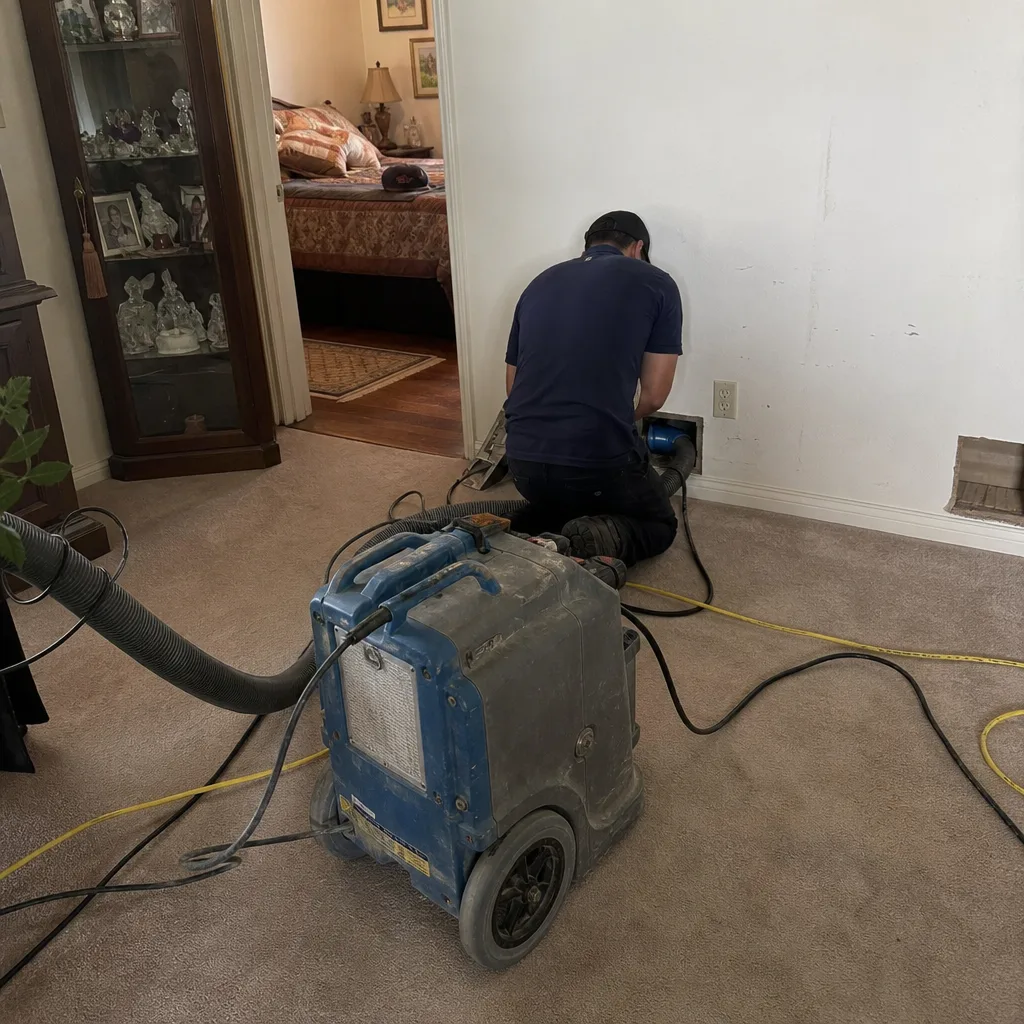
- Containment setup. Negative-pressure equipment seals the work area and holds the entire system under vacuum so dislodged debris has one path out: into the collection unit.
- Access cuts. We create access points at key duct sections so the brush and hose can reach the length of each run. Access points are sealed afterward.
- Mechanical agitation. A rotary brush system travels through each duct run, physically scrubbing debris off the duct walls rather than just loosening it.
- Source vacuuming. The professional vacuum unit captures everything the brush releases.
- Register and grille cleaning. Supply registers, return grilles, and any visible components are cleaned separately.
- Reassembly and seal. Access points are closed, joints reconnected, and any damaged insulation noted for repair.
- Documentation. Before-and-after photos of the duct interior are taken so the homeowner has proof of what was there and what came out.
Notice that most of those steps happen before the first brush enters a duct. Setup takes real time. Any “cleaning” that skips containment or access cuts is not doing the same job, regardless of how many registers get hit with a vacuum hose.
The Equipment Gap: Restoration-Grade vs. Shop-Vac
The professional equipment question matters more than most homeowners realize. A portable vacuum and a hand-held hose can pull dust off the inside of a duct opening. It cannot hold a whole duct system under negative pressure, cannot filter airborne contaminants down to HEPA level while a job is running, and cannot agitate debris that’s adhered to duct walls.
That’s where restoration-grade equipment changes the equation. We use Abatement Technologies negative-air units, which are the same class of equipment used in professional air-quality and remediation work. Those units don’t just filter the air they move; they hold pressure on the entire duct system while it’s being worked on, so contaminants are captured at the source during cleaning rather than released into the room.
Containment is the whole point. When a duct is disturbed, debris becomes airborne. If the system isn’t under negative pressure while that disturbance happens, the debris goes somewhere. Restoration-grade equipment gives every dislodged particle one route: into the HEPA-filtered unit. That matters in Beaumont specifically because the debris being disturbed can carry microbial material from months of humid-condition growth, not just ordinary household dust.
Nikro professional HVAC cleaning units provide the source-removal vacuum capability. Those units are built for commercial-grade work with serious static pressure and volume, not consumer-grade capacity. The difference shows up on the first pass, and it shows up in how much debris is actually captured versus just moved.
For mechanical agitation, we use the Rotobrush rotary brush system, the industry-standard cleaning platform used by certified duct cleaning professionals nationwide. It physically contacts duct walls, agitates adhered buildup, and works through supply and return runs without relying on air-washing. And because the whole system can be treated, the work reaches flex duct, rigid metal, and main trunks, not just the register openings.
Equipment choices aren’t an abstract quality debate. They determine whether a job is source removal or surface attention. Rest of our guide: if a company arrives with a shop-vac and a hand-held hose, you’re paying for a service that can’t functionally do what a duct cleaning is supposed to do.
Source Removal vs. Surface Agitation
Two phrases get used interchangeably in this industry, and they shouldn’t be. Surface agitation loosens debris on the surfaces a tool can reach. Source removal captures the buildup at the source and takes it out of the system under containment, then documents what was there.
Only one of those actually cleans the system.
Here’s the practical difference:
- Surface agitation only disturbs debris, often moving it downstream into branches the homeowner can’t see. Sometimes it lands on the evaporator coil, sometimes it stays in the return trunk, and sometimes it just redistributes inside the system.
- Source removal seals the system under negative pressure, mechanically agitates every branch, captures all debris at the source with the professional unit, and leaves the system genuinely cleaner and drier.
In Beaumont, the consequences of only lightly agitating duct surfaces are worse than in a dry climate. Loosened debris that stays in the system absorbs humidity, becomes the base for new growth, and can make the next cleaning cycle shorter. Surface agitation that doesn’t remove may actually accelerate the return of contamination in a humid system.
Source removal also does more than clear debris. It clears the moisture-holding accumulation that keeps the inside of the duct damp. A properly mechanically-cleaned and contained duct has less material for moisture to feed, and less fuel for microbial growth during the humid months that follow.
If a company can’t explain the difference between surface agitation and source removal when you ask, that’s a reasonable signal to keep looking. A company that does source removal will tell you about it in specific terms, because the process is the service.
Post-Storm and Post-Flood Duct Inspection in Beaumont
Beaumont’s storm season adds a variable that dry climates don’t face: debris infiltration. High winds drive dust, plant material, insulation particles, and moisture into the system through roof penetrations, compromised attic connections, and open duct ends when there’s damage to the system envelope. Post-flood conditions are worse. Standing water anywhere in the home can push moisture through the duct structure, and duct insulation that absorbs water doesn’t dry out easily in a humid climate.
A duct inspection after a storm or flood is different from a routine cleaning inspection. It follows a specific protocol:
- Check for physical duct damage first. Look for disconnected joints, collapsed sections, crushed flex duct, or open ends where water and debris can enter.
- Inspect insulation for water saturation. Wet duct insulation is a serious problem in Beaumont’s humid climate because it won’t readily dry. Saturated insulation needs to be addressed, not just cleaned.
- Look for visible moisture at the air handler and around the evaporator coil and condensate area. Standing water anywhere in these locations creates growth conditions in the humid summer months.
- Assess debris infiltration at roof penetrations and attic connections. Storm wind can force material into the system through paths that don’t show up at the registers.
- Document what you find before cleaning so the cleaning is targeted to what’s actually there.
If the inspection finds damaged or disconnected ducts, cleaning is only half the job. A system with disconnected sections will re-contaminate quickly, and air quality will be compromised regardless of how thoroughly you clean it. That’s why we handle repair alongside cleaning, and why “we clean it, and we can fix it” is a real operational distinction after a storm event.
If your home in Beaumont has been through a storm or flood and you’re unsure whether the ducts need more than a routine cleaning, an inspection is the place to start. Send us a photo if you have one, or call and we’ll walk through it with you.
How to Verify the Work Was Actually Done
Duct cleaning has a reputation problem that isn’t hard to understand. The work is invisible; a technician can claim to have cleaned a system with almost no way for a homeowner to verify it. That’s why documentation matters.
Three things let you verify a job:
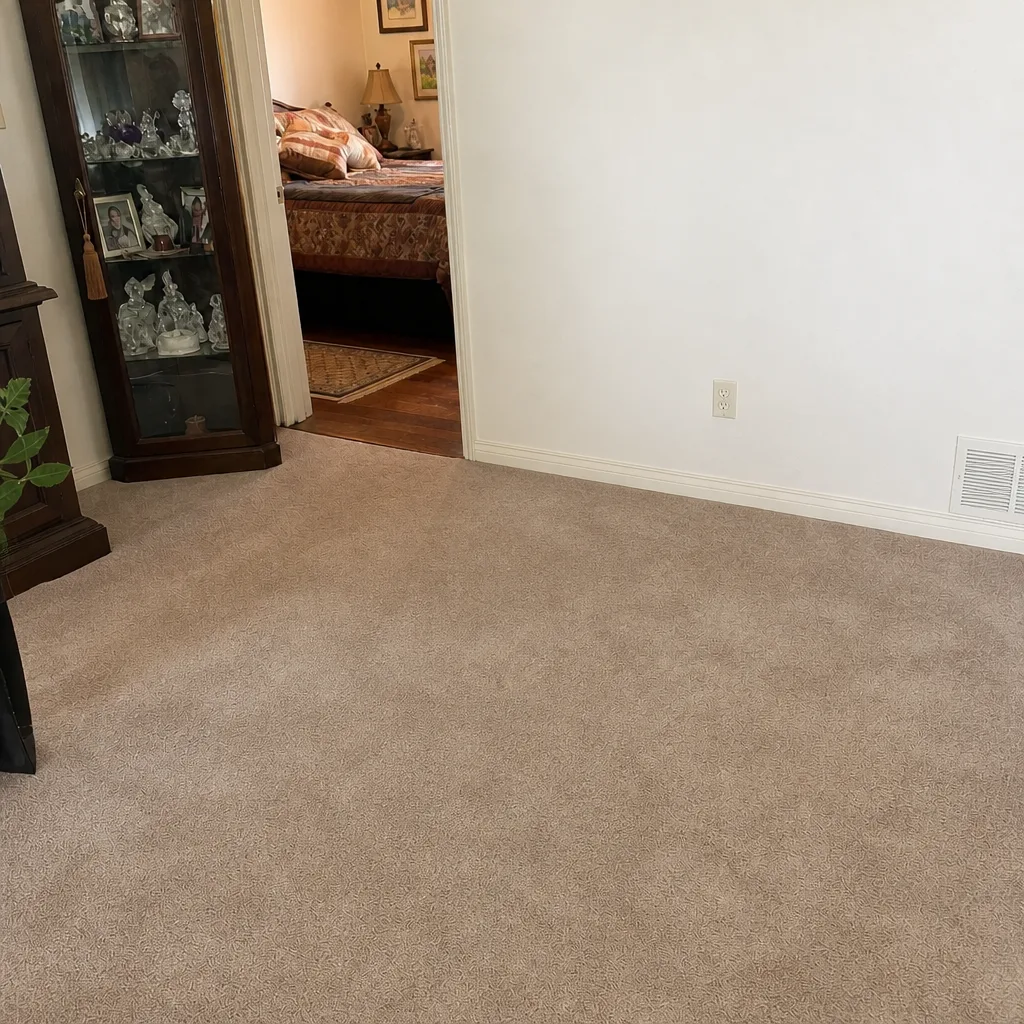
- Before-and-after photos of your own ducts. Not stock images from a website. Your duct runs, photographed at each access point before the cleaning and after it. The difference should be visible without a technician explaining it.
- Documented access points. A professional job creates access cuts so each duct run can be reached. Those cuts are sealed afterward. Ask for the access point locations and confirm they were sealed when the job ended.
- Debris volume evidence. Restoration-grade equipment captures the removed material in a collection unit. Ask what was pulled out and where it came from in the system.
What a homeowner should not rely on: a technician’s verbal assurance, a vague “we cleaned the whole system” statement, or a general purpose website photo. Ask for documentation tied to your own home.
One other verification point: ask whether the company handles repair. If the answer is “we don’t do that,” you may end up calling a second contractor if the cleaning inspection finds damage. A full-system resource handles both. Learn more about how we approach Beaumont service by covering all three of our core services: cleaning, repair, and dryer vent cleaning.
How Often Should Ducts Be Cleaned?
There’s no universal number. The honest answer is that frequency depends on the home, the occupants, and the local climate. In Beaumont, the humid condition that makes duct contamination more aggressive than in a dry climate means several factors can shorten the interval:
- Homes with pets, where dander concentrations build faster in humid air.
- Households with allergy or asthma sufferers, who notice air quality changes sooner.
- Homes that have recently had renovation work, which introduces construction dust into the system.
- Homes with ongoing high HVAC runtime, since extended circulation cycles move more debris per month.
- Homes that have recently been through a storm event or noticed water intrusion anywhere near the duct system.
Several signs suggest cleaning is due, regardless of how long it’s been:
- Visible dust on supply registers comes back quickly.
- A musty or damp smell comes out of the vents when the HVAC kicks on.
- The system is running longer to reach the same temperature.
- Allergy symptoms are worse indoors than outdoors.
- A home inspection or air quality test has flagged the ducts.
What you shouldn’t do is treat cleaning as a fixed annual event. A clean system in a small home with no pets may not need attention for years. A system that stayed damp through a wet summer may need attention sooner. The right approach is to inspect when the signs appear, rather than following a calendar.
One thing is worth stating plainly: the interval itself is less important than doing the cleaning correctly when it’s needed. A surface-level pass every year does less for your air quality than one proper source-removal cleaning done right.
When Your Ducts Need Repair, Not Just Cleaning
A cleaning inspection often turns up something else: a duct joint that’s come apart, flex duct that’s been crushed or kinked, insulation that’s broken away, or a connection that’s leaking air into the attic. Those aren’t cleaning problems, and cleaning alone doesn’t fix them. A repaired system holds pressure and moves air as intended. A system with a disconnected section does neither, and re-contaminates faster after any cleaning.
Signs you may need duct repair alongside cleaning:
- Certain rooms never seem to get adequate airflow, even with the thermostat calling for it.
- Noise at the registers suggests loose or vibrating duct sections.
- Energy bills creep up without an obvious equipment change.
- You can see duct connections in the attic that have separated.
- A home inspection noted disconnected, crushed, or leaking ducts.
- After a storm, you noticed duct insulation is damaged or saturated.
Because we handle cleaning and repair as separate services under one company, we don’t need to call out a second trade to address what the inspection finds. The cleaning happens, and the repair happens, and the system ends up in the condition it needs to be in. That’s what we mean by your full duct system.
We also work with Honeywell and Aprilaire systems, so when the home has a whole-home air quality or filtration setup, we can work around it during the cleaning and note any interaction between filtration and duct condition. That’s often where a homeowner discovers the filtration side of the system is being asked to do more work than it should because the ducts haven’t been properly cleaned.
Common Mistakes to Avoid
- Judging the job by the number of registers hit. Registers are the visible part of a hidden system. Cleaning only the registers leaves the trunks, branches, and returns untouched, which is exactly where humidity-driven growth concentrates in Beaumont.
- Skipping containment setup. A cleaning without negative-pressure containment releases dislodged debris into the home. In a humid climate, that debris carries microbial material that a shop-vac setup can’t filter.
- Accepting air-wash-only cleaning. Air-based cleaning loosens debris without mechanically agitating it off the walls. In a Beaumont duct with damp conditions, loosened debris can stay in the system and support regrowth.
- Ignoring signs of duct damage. A disconnected joint or crushed flex duct will re-contaminate a cleaned system quickly. If the inspection finds damage, repair should be part of the conversation, not a call to a different contractor.
- Not asking for before-and-after documentation. Without photos of your own ducts, you have no verifiable record of what was cleaned or how much was removed.
- Scheduling cleaning right before a storm without inspecting damage first. If storm damage or water intrusion is present, inspection should come first and inform what the cleaning actually needs to address.
- Relying on a fixed annual schedule rather than the signs. Homes in Beaumont with pets, allergy sufferers, recent renovations, or high HVAC runtime often need cleaning sooner than the calendar suggests, and homes that stayed dry may not need it as often.
See the difference
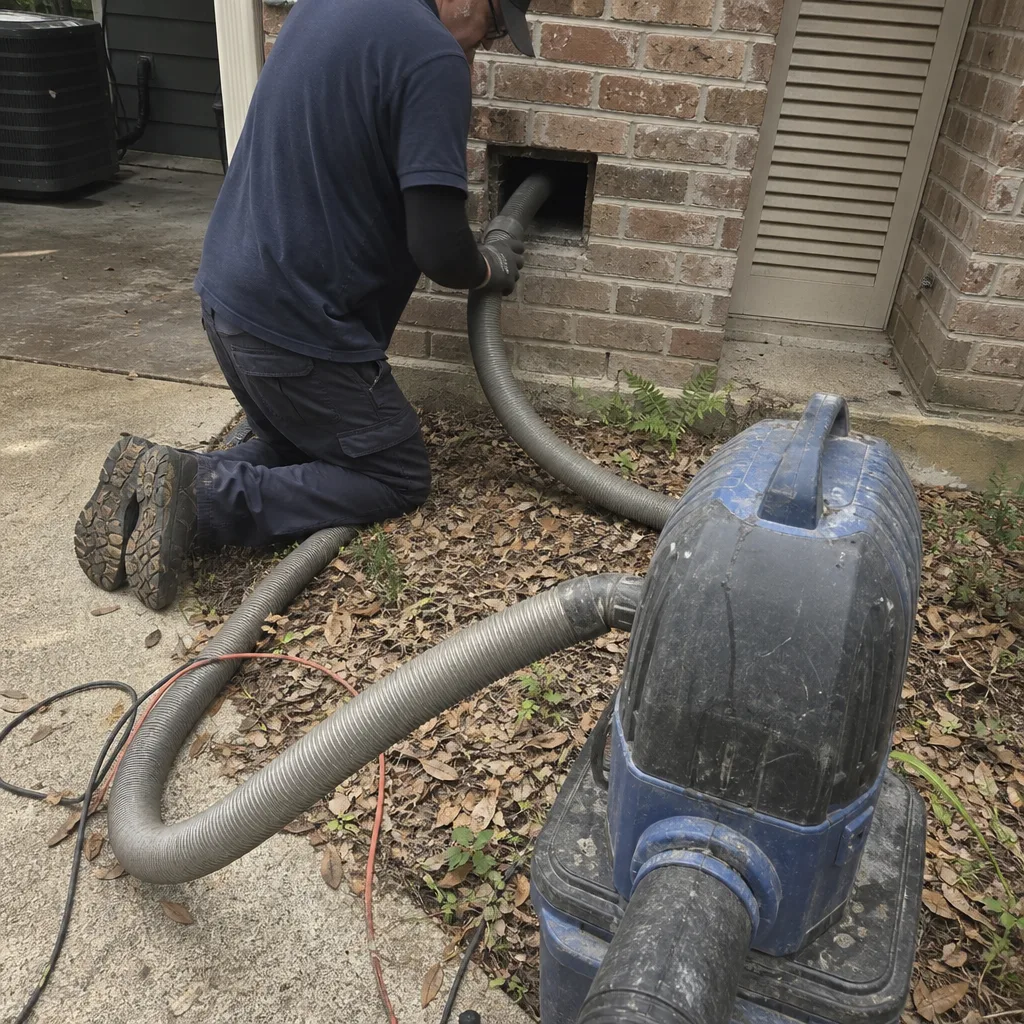 Before
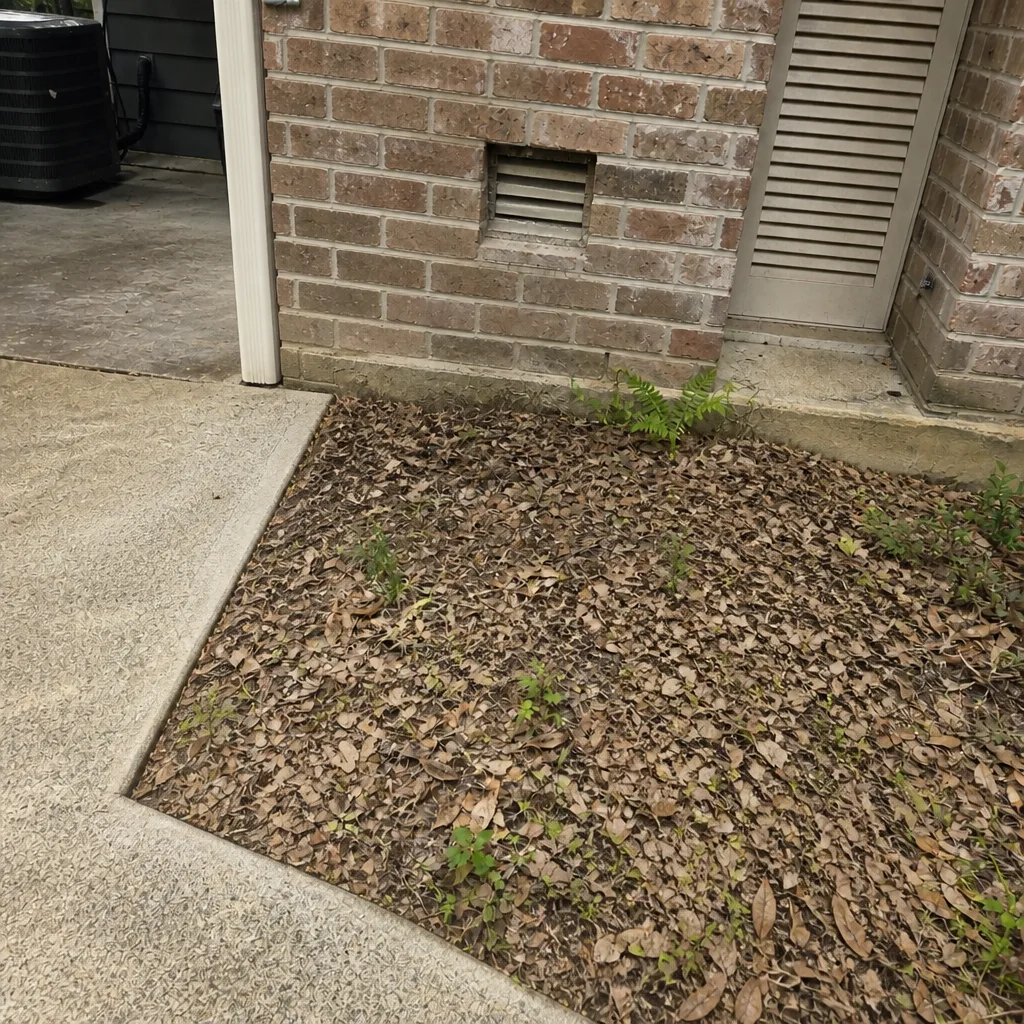 After
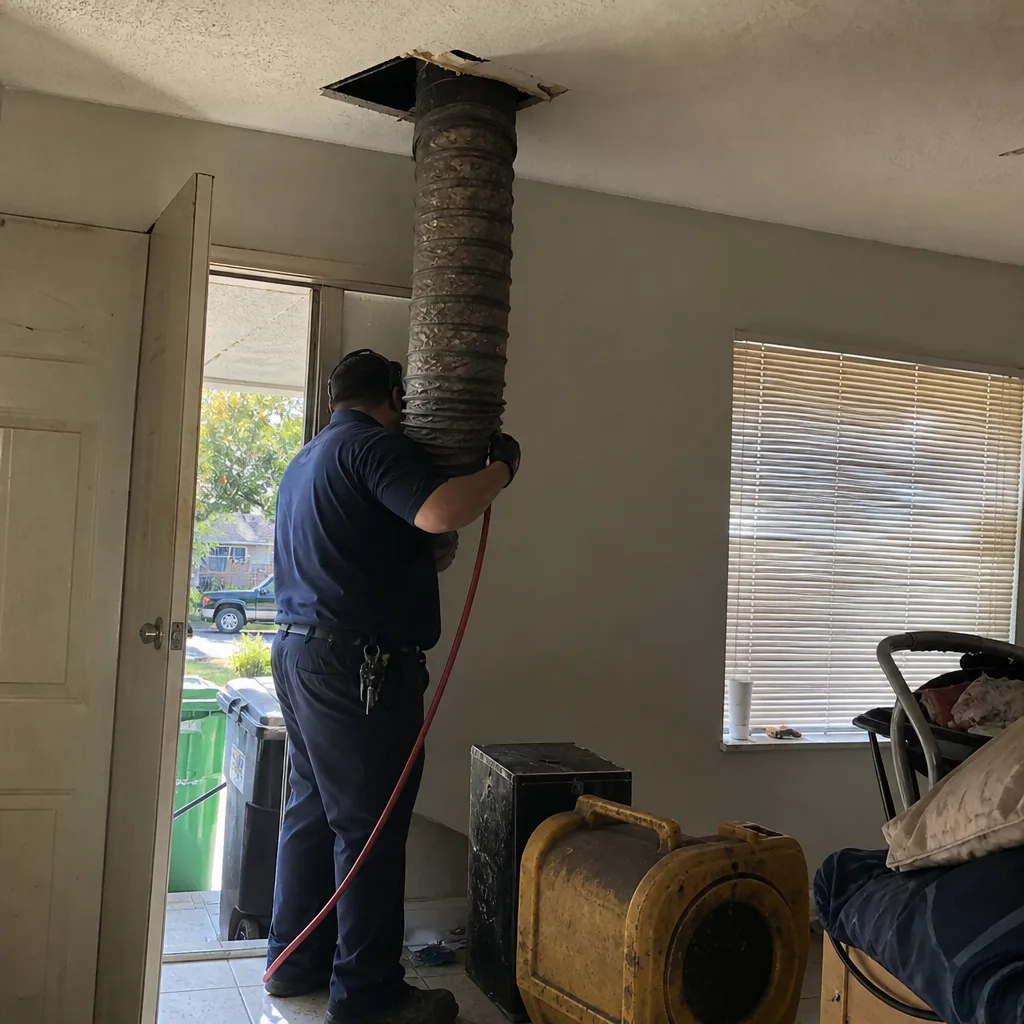 Before
 After
 Before
 After
When to Call a Professional
Call a professional if you’re seeing any of these in Beaumont:
- Dust returns to supply registers within days of wiping them.
- A musty smell comes out of the vents when the HVAC runs.
- Allergy symptoms are worse inside than outside.
- You’ve had a home inspection note duct contamination, moisture, or damage.
- Your home has been through a storm, flood, or water intrusion event and ducts haven’t been inspected.
- You’re planning a renovation and want the ducts cleared before or after the work.
- Airflow is weak in certain rooms, suggesting disconnected or crushed duct runs.
- You want a record of what’s actually inside the system before deciding what to do.
We can send out a professional inspection and give you a written estimate for cleaning, repair, or both, depending on what the system needs. Beaumont Duct Cleaning offers free estimates in Beaumont. Call (866) 935-2761. We answer 24/7. Fast dispatch from 7am to 7pm, Sunday through Friday.
Frequently Asked Questions
Beaumont duct cleaning prices depend on system size, duct configuration, access difficulty, and whether repair is needed. Whole-system cleaning is priced per job by written estimate rather than per vent, because per-vent pricing creates an incentive to hit as many vents as possible rather than clean the system thoroughly. Call (866) 935-2761 for an exact quote. Estimates are free, and the written estimate sets the final price before any work starts.
Cheap quotes usually skip the parts of the job you can’t see: containment setup, access cuts, mechanical agitation with a rotary brush, and restoration-grade vacuum equipment. What you’re getting at a lower price is often surface-level air-washing, which doesn’t remove adhered debris and doesn’t hold the system under negative pressure. In Beaumont’s humid climate, that’s the cleaning that has to happen again soonest. We’d rather quote the real job and document it than quote the low number and skip the work. Call (866) 935-2761 for a written estimate.
Ask for before-and-after photos of your own ducts, at your own access points, taken during the job. Ask what debris was removed and where in the system it came from. Ask whether access cuts were sealed when the work finished. If a company can’t produce documentation tied to your specific home, you don’t have a verifiable record. Every cleaning we do comes with before-and-after photos so the homeowner can see what the duct interior looked like before and after. Call (866) 935-2761 for an estimate.
Yes, in Beaumont especially. Registers are the visible outer edge of a system that runs through trunks, branches, and returns you can’t see. The humid conditions here mean the interior of the duct can hold more moisture, debris, and microbial growth than the registers suggest. Visible dust at the registers is a sign cleaning is due, but their absence doesn’t prove the ducts are clean. An inspection is the way to know. Call (866) 935-2761 for a free estimate.
Yes, but inspection has to come first, because a storm or flood often leaves physical duct damage in addition to contamination. Disconnected joints, crushed flex duct, and water-saturated insulation need repair or replacement, not just cleaning. A cleaning on a damaged system won’t stay clean for long. Our inspection protocol checks for damage before any cleaning is planned, and we handle repair under the same company for anything the inspection turns up. Call (866) 935-2761 to schedule a post-storm inspection.
Either is reasonable depending on what the renovation involves. Cleaning before renovation is standard if the ducts are already dirty and you want the construction dust to land in a clean system. Cleaning after renovation makes sense when the work itself will introduce significant dust. The key point either way: renovation dust loads a system much faster in a humid climate, so schedule the follow-up inspection. Call (866) 935-2761 and we’ll help you decide which timing fits your project.
The Bottom Line
Beaumont’s humidity makes duct contamination behave differently than it does in drier climates, which means the cleaning methods matter more here than a generic quote suggests. Thorough cleaning means mechanical agitation with a rotary brush, whole-system containment under negative pressure, restoration-grade vacuum equipment that captures what the brush releases, and documentation that lets you verify the work happened. Surface air-washing can’t stand in for any of that. If you’ve got signs of contamination, storm damage, or duct damage alongside your cleaning need, it’s worth having both assessed at once, because a repaired and cleaned system is the one that stays clean. Beaumont Duct Cleaning offers free estimates. Call (866) 935-2761. We answer 24/7. Fast dispatch from 7am to 7pm, Sunday through Friday.
Written by the team at Beaumont Duct Cleaning.