
Last updated November 16, 2026
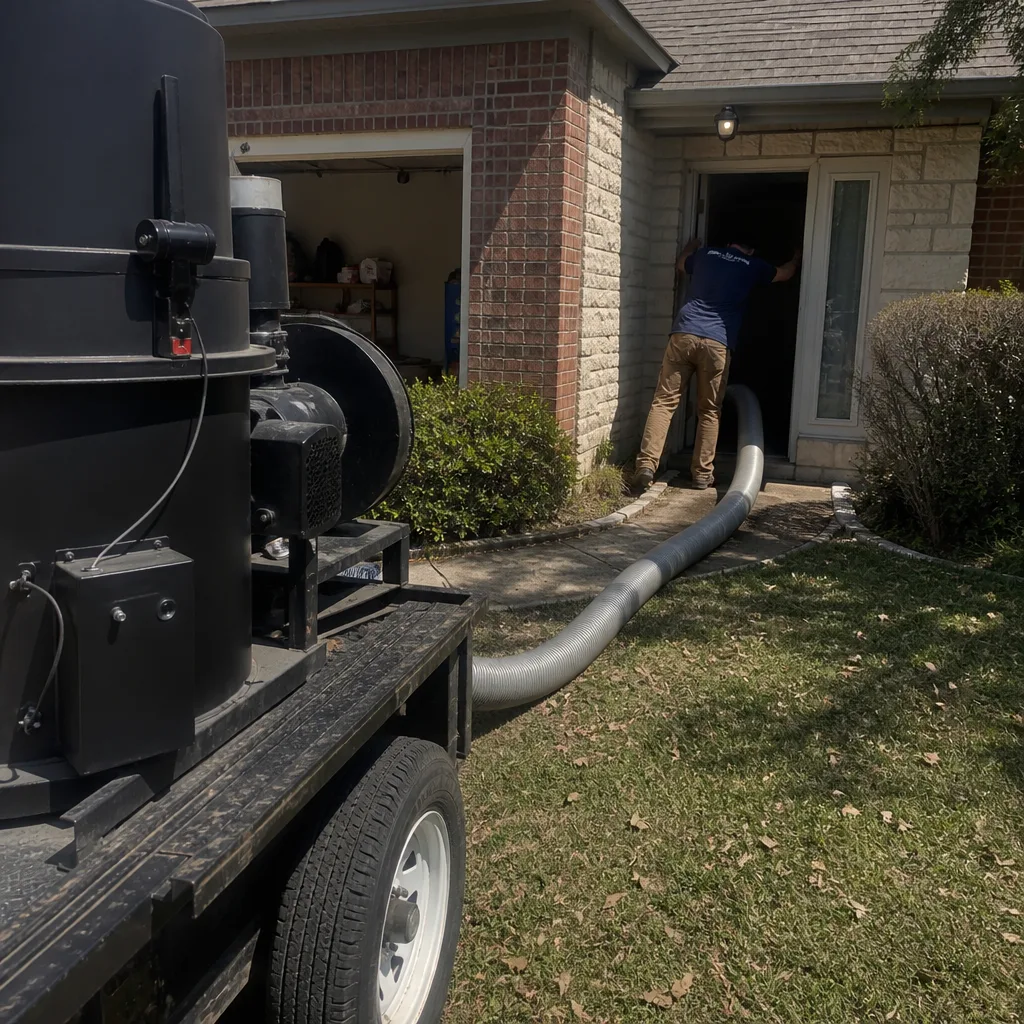
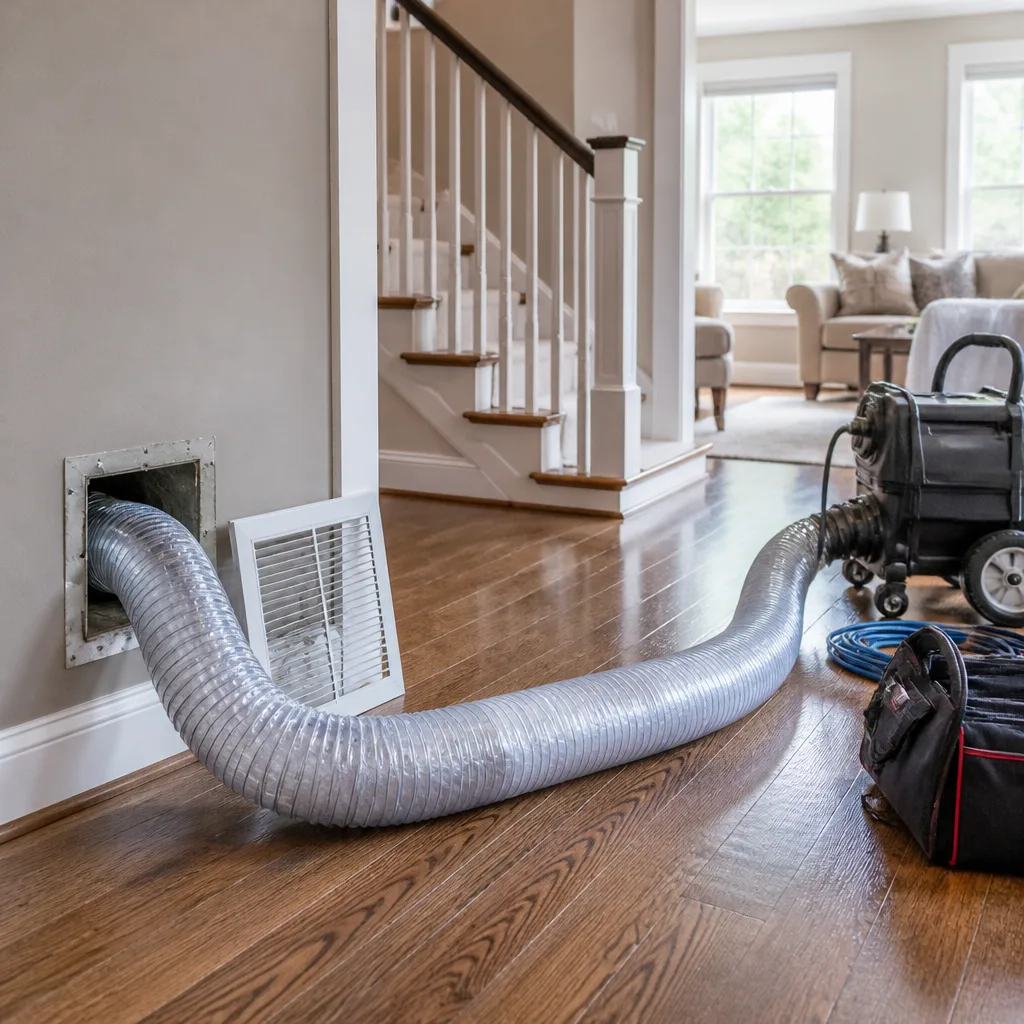 Whole-home duct cleaning
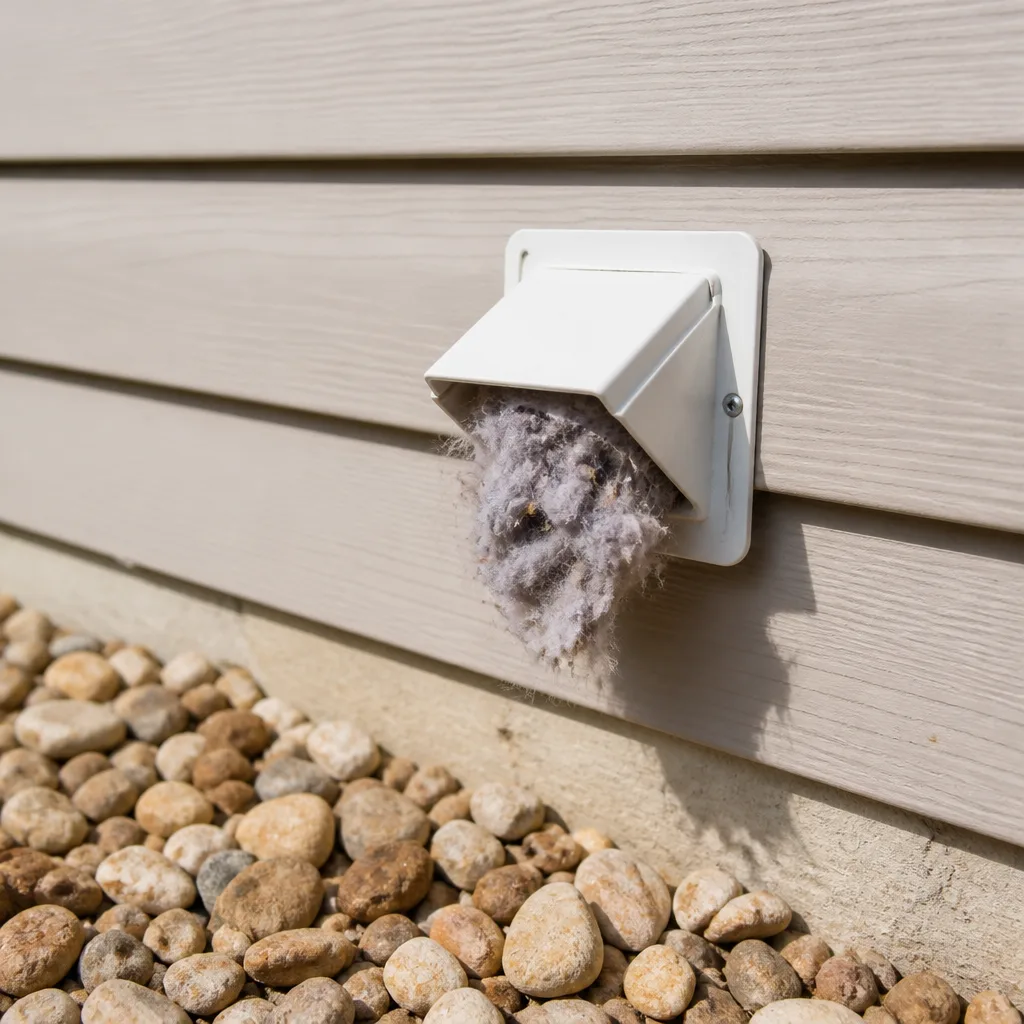 Dryer vent cleaning
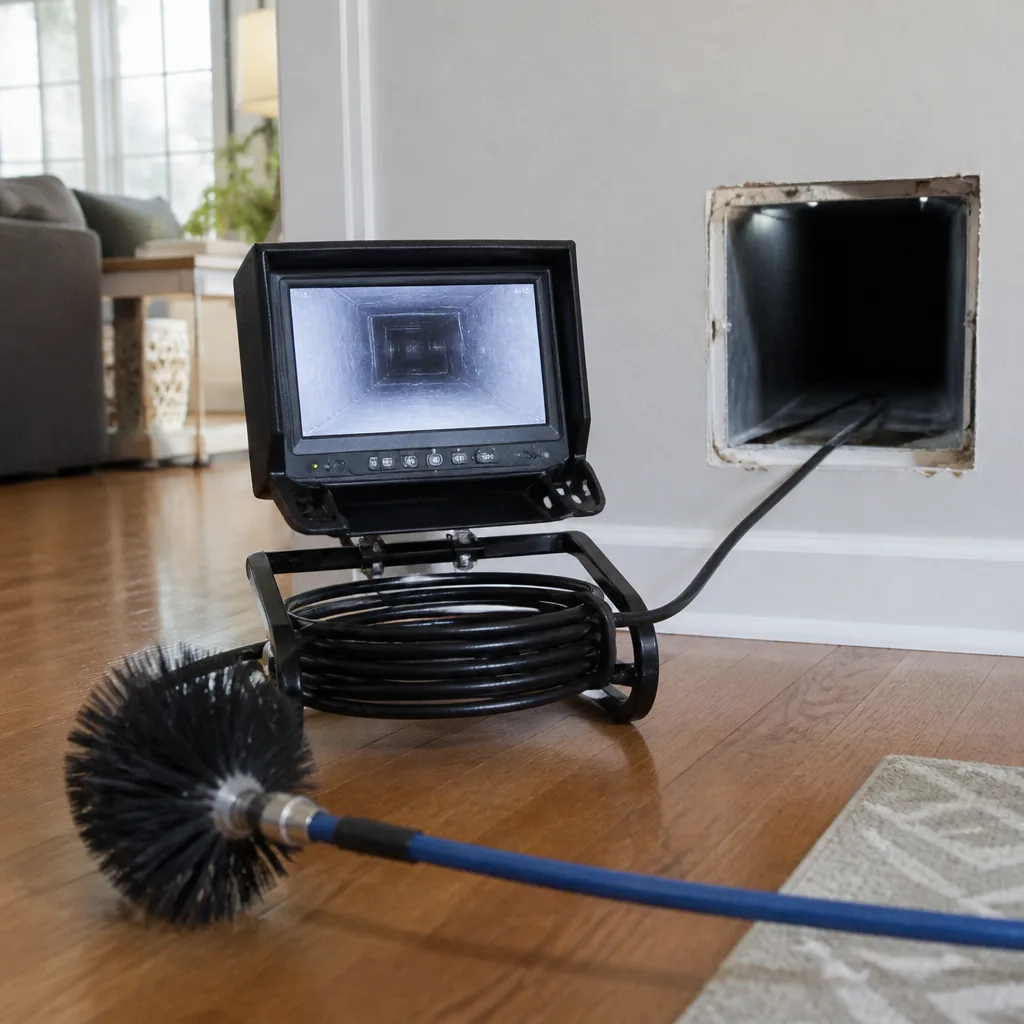 Camera inspection
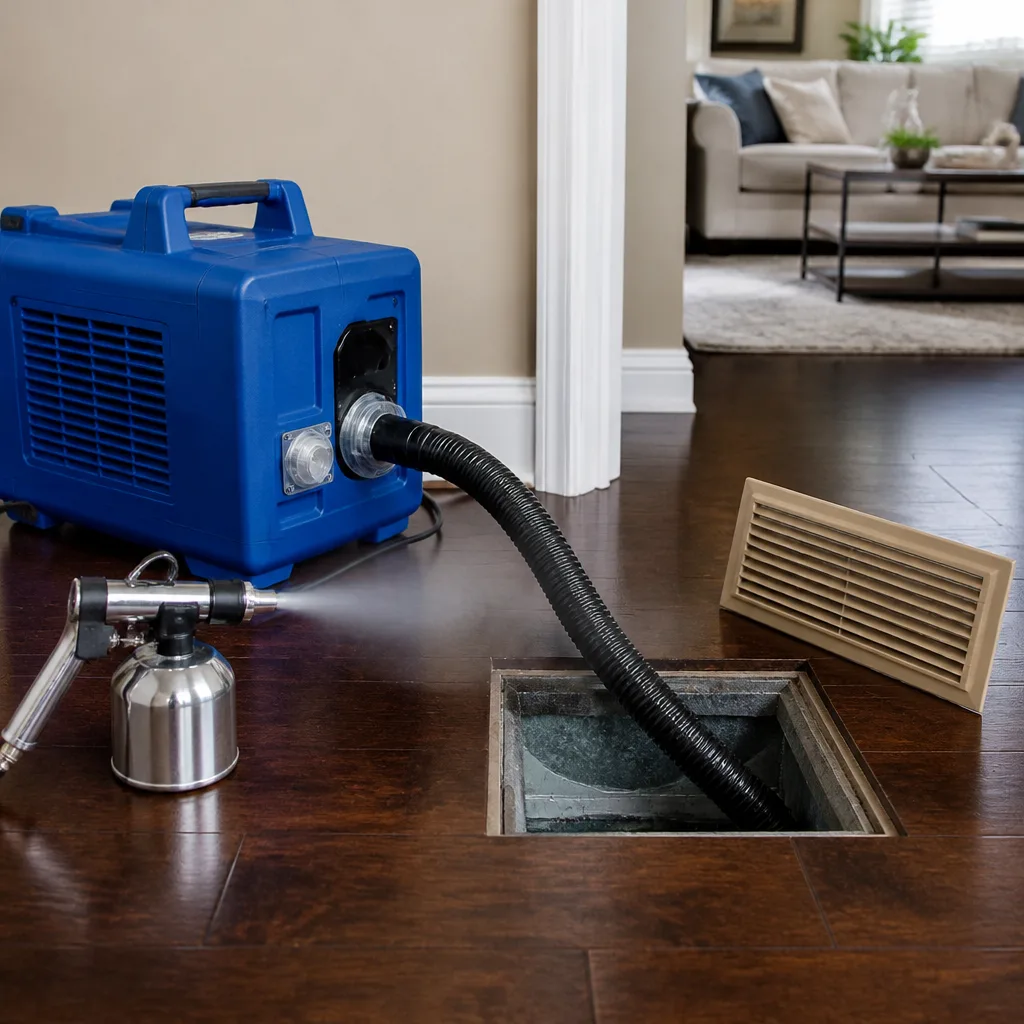 Sanitizing & deodorizing
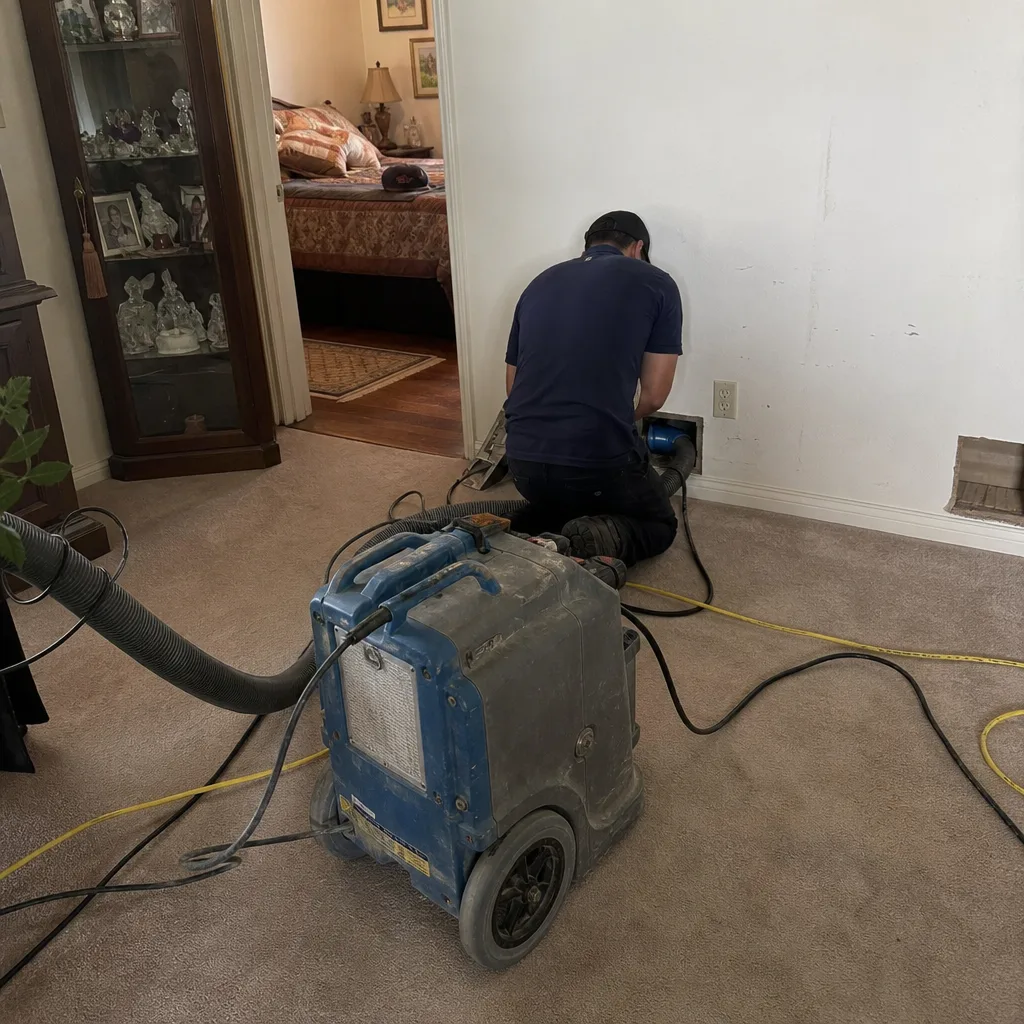
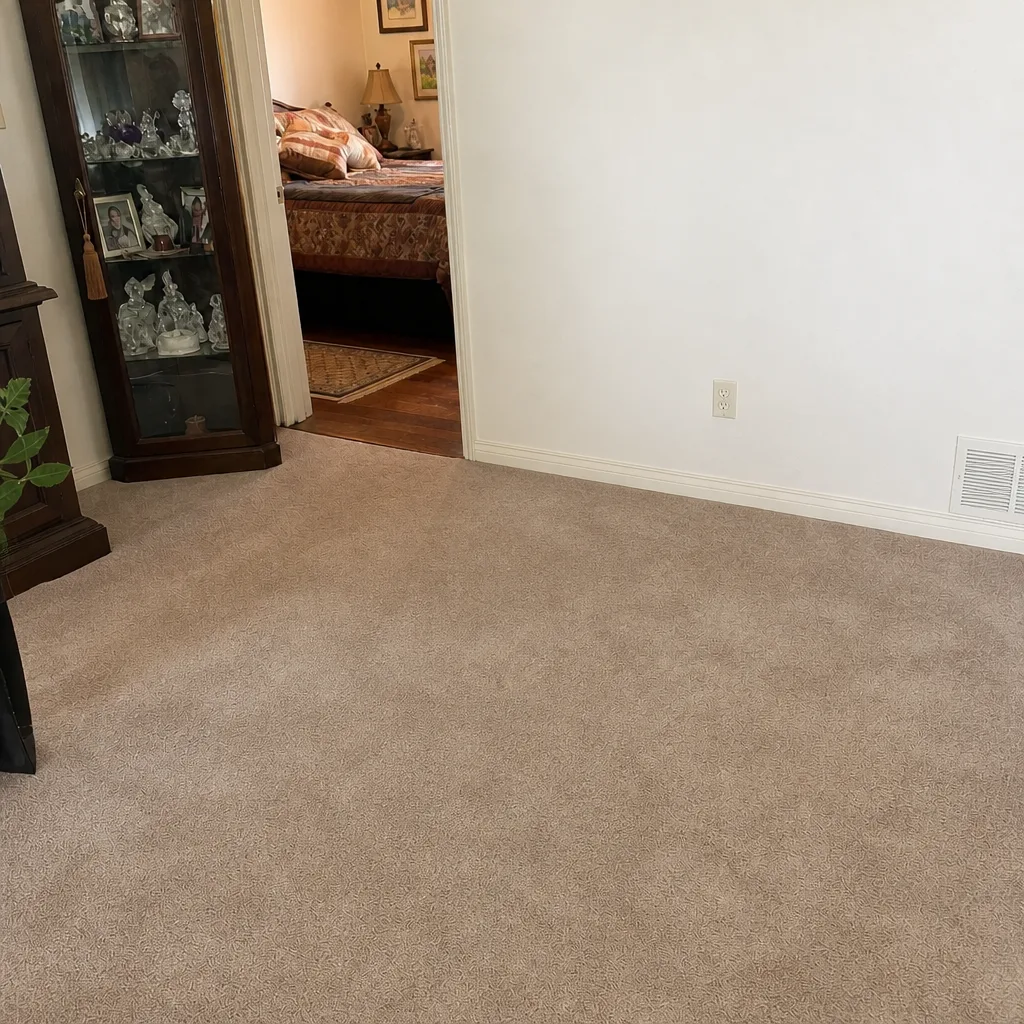
Whole-system duct and dryer vent check with before-and-after photos - you see exactly what came out of your vents
That "$99 whole-house special" is a bait ad - the real number appears once they are in your hallway, or the "clean" is a shop-vac at the register. We photograph the inside of your ducts before and after instead.
Air Duct Cleaning Troubleshooting in Beaumont: Common Problems and How to Fix Them
If a duct cleaning didn’t fix your airflow problem, it’s probably because airflow problems are rarely a dirt issue. They’re a duct integrity issue, and no brush or vacuum changes that. A crushed flex run behind a wall, a joint that pulled apart under the house, a plenum boot that never got sealed properly during the original install: none of these improve when a machine runs through the system. This guide teaches you how to tell a cleaning problem from a mechanical one before you spend money on either. You’ll learn which smells point to which cause, what to check at your registers, why uneven room temperatures usually survive a cleaning, and what a proper post-cleaning inspection should actually show you. Beaumont homeowners deal with a specific set of conditions, and we’ll get to those as we go.
Quick Answer
Most duct problems in Beaumont fall into two buckets: debris-related (dust, musty odor, visible buildup at the register) and structural (weak airflow, uneven temperatures, disconnected or crushed duct runs). Cleaning fixes the first. The second needs repair, sealing, or balancing, and cleaning alone will not resolve it. If you’re unsure which one you have, a visual inspection of your registers, your air handler, and accessible duct runs in the attic will usually tell you within twenty minutes.
Styles & brands we work with
- Whole-home duct cleaning
- Dryer vent cleaning
- Camera inspection
- Sanitizing & deodorizing
Table of Contents
- Debris Symptoms vs. Structural Symptoms: How to Tell Them Apart
- What That Smell Actually Means: Mildew, Burned Dust, and Rodent Activity
- Why Uneven Room Temperatures Rarely Improve After Cleaning
- When a Troubleshooting Call Is Really a Repair Call
- What a Post-Cleaning Video Inspection Should Show You
- How Professional Duct Cleaning Actually Works, Step by Step
- Beaumont-Specific Conditions That Affect Your Duct System
- What You Can Check Yourself (And What You Shouldn’t)
Debris Symptoms vs. Structural Symptoms: How to Tell Them Apart
This distinction is the whole game. Homeowners in Beaumont often call for a cleaning when the real problem is mechanical, and sometimes the reverse: they assume their ducts are broken when the system is simply loaded with debris. Getting the diagnosis right first saves you from paying for work that won’t change what you’re experiencing.
Here’s the split, sorted by what you actually observe:
Debris-related symptoms (cleaning usually helps)
- Visible dust or lint packed around the supply registers, especially the ones in rooms you use most
- A musty or stale smell that gets stronger when the system first kicks on and fades after a few minutes
- Dust settling on furniture faster than it used to, or a constant film on dark surfaces
- Return grilles that look gray or matted when you shine a light into them
- Recent renovation, a new roof, or drywall work that sent fine dust through the house
Structural symptoms (cleaning won’t fix these)
- Airflow that’s weak at one or two registers while the rest of the house seems fine
- Conditioned air you can hear moving in the attic but barely feel at the vent
- One room consistently 4 to 8 degrees off from the rest of the house, no matter the season
- Whistling or roaring at a register, which often signals a restriction upstream
- Flex duct that visibly sags, kinks, or droops where it crosses a joist in the attic
- A supply register that pushes almost nothing while the air handler runs hard
Take a bright flashlight to your accessible attic runs. Flex duct that has collapsed under its own weight, been stepped on during a prior repair, or pulled loose from a takeoff collar is a repair item, not a cleaning item. If you see a run that sags like a hammock between two joists, that’s your restriction. No amount of brushing changes a crushed tube.
What That Smell Actually Means: Mildew, Burned Dust, and Rodent Activity
Smell is the most useful diagnostic tool you have, and it’s the one most homeowners describe too vaguely on the phone. “It smells weird” could mean three completely different problems with three different remedies. Here’s how we coach people to sort it out.
- Mildew or a wet-basement smell. Usually a moisture problem, often where the air handler sits in an unconditioned attic or a closet that collects condensation. In Beaumont’s humidity, a damp evaporator coil or a wet drain pan can seed that smell into the whole airstream. Cleaning helps, but the moisture source has to be addressed or it comes back.
- Burned dust or a hot, dry, metallic edge. This often points to the air handler’s heat strip or blower motor, not the ducts. If the smell appears only when the heat runs, the ducts aren’t necessarily the culprit. Don’t keep running it; have the mechanical equipment looked at.
- Rodent activity (a sharp, ammonia-like, or stale urine smell). Attic flex duct is a favorite route for rodents in this region. They nest in the insulation, leave droppings in the runs, and sometimes chew through the duct wall itself. This needs containment-grade cleanup, seal-up of the entry points, and often duct replacement for the affected runs, not a standard cleaning pass.
- A chemical or new-plastic smell. Usually a recent install, a new coil, or off-gassing from fresh materials. It typically fades within a few days to a couple of weeks. If it doesn’t, call someone back out.
If you smell something that could be plastic, electrical, or burning, turn the system off and have the equipment inspected before you run it again. That’s not a cleaning problem, and running the blower can make it worse.
Why Uneven Room Temperatures Rarely Improve After Cleaning
This is the most common disappointment we hear about after a cleaning. A homeowner has one hot bedroom, calls for a duct cleaning, the ducts get cleaned, and the bedroom is still hot. That’s not a failed cleaning. That’s a system that was never balanced in the first place, and cleaning was never going to balance it.
Uneven temperatures come from three usual causes:
- Restriction in a specific run. Crushed flex, a kinked or overly long takeoff, or a run sized too small for the room. Fixing this means replacing or rerouting the offending run.
- Leaking joints and disconnected boots. Air escapes in the attic before it ever reaches the register. This can sometimes mean 20 to 30 percent of the air you’re paying to cool never arrives. Sealing the leaked connections with mastic or approved tape is the remedy.
- System imbalance. The bedroom sits at the end of the trunk line, has a smaller run, and has more thermal load. Balancing dampers, a return-air improvement, or a manual J/D recalculation by an HVAC engineer is what actually solves this. It’s a design issue, not a cleaning issue.
The good news: all three of those are within the scope of air duct cleaning when it’s paired with repair, which is broader than what many homeowners expect. A cleaning pass scrubs the duct walls. A repair pass addresses the joints and runs. You want a contractor who can tell the difference and quote both, rather than one who cleans first and won’t come back when the bedroom is still hot. Also, don’t chase a room-temperature problem with a register booster fan before you’ve verified the duct itself is intact. Boosting a leaky run just pushes more air into the attic.
When a Troubleshooting Call Is Really a Repair Call
Some duct conditions can’t be cleaned around, and a good technician will say so rather than run a brush through a broken system. Here are the ones we see most in Beaumont homes, and what to do about each.
- Crushed or collapsed flex duct. Often caused by attic traffic, poor support, or rodents. The duct needs to be replaced for that run. Cleaning a crushed tube does nothing useful.
- Disconnected plenum or branch takeoff. The duct has pulled free from the collar where it connects to the trunk. That run is dumping conditioned air into the attic. Reconnect and seal.
- Failed connections at boots and registers. Gaps where the duct meets the floor boot or ceiling box. Common in older Beaumont homes where the original install relied on duct tape (which dries out over the years) instead of mastic.
- Torn duct liner. Interior foil or insulation liner has ripped loose and is now flapping inside the airstream. That’s a restriction and a debris source; the run needs to be repaired or replaced.
- Broken or missing register dampers. The little lever at the supply grille that’s supposed to balance the room. When it’s broken, the room runs wide-open all the time and throws the whole system off.
If your air handler is short-cycling, running hard, or your utility bills have climbed without a rate change, and you’ve already cleaned the ducts, ask a technician to check the duct system and equipment jointly. Weak airflow at the register plus a hard-working blower is almost always a restriction or leak, not debris. Beaumont homes with long attic runs are especially prone to leaks at the takeoffs.
What a Post-Cleaning Video Inspection Should Show You
Ask for video. Always. If a contractor won’t show you footage of your own ducts before and after, you have no way of knowing what happened while the machine was running. A verbal “we cleaned it, looks great” is not a report. It’s an absence of one.
Here’s what a proper inspection should look like when you ask for it:
- Before-and-after footage of each main trunk and each branch run that was cleaned. Shot from inside the duct, not at the register, and looking both directions along the trunk.
- Clear light on the duct wall. The inner surface should be visibly free of the heavy dust film that was there before. You’re not expecting a mirror finish; you’re expecting a measurable difference.
- Footage of any run where debris was unusually heavy, so you can see what came out and understand what to watch for going forward.
- A brief written summary of what was cleaned and any runs that showed damage or leaks, which should have been flagged to you before the work concluded.
- Photos or note of any sealing work that was quoted separately, not just a verbal mention.
If you receive the footage and something looks off, say so before the technician packs up. The right moment to push back is while the equipment is still set up. Also, capture your own baseline: take a phone photo of the register grilles before and after, and notice whether the dust film returns to the grille in the same way over the following weeks. If it does, the debris source is still active somewhere upstream.
How Professional Duct Cleaning Actually Works, Step by Step
Understanding the process makes you a better judge of who’s doing the job right and who’s not. Here’s the sequence we use on every system, and why each step matters.
- Inspection and system mapping. We inspect the layout, note the number of runs and any obvious damage, and identify the register count. This is where a repair issue gets caught before the machine goes in.
- Seal and set up negative air with containment. Using Abatement Technologies equipment, we pull the system under negative pressure and guard the conditioned space outside the ducts. This is the same class of equipment used in professional air-quality remediation work, and it’s why the debris leaves the system rather than being blown back into the room.
- High-level agitation with the Rotobrush mechanical brush. The brush runs through each run, physically scrubbing the duct wall and removing buildup rather than just air-washing it loose. Air-only methods can leave a dust film behind; mechanical brush cleaning gets it off.
- Contact cleaning with Nikro equipment. Commercial-tier gear for the air handler, plenum, and register boots.
- Reconnect, seal, and verify. We close up, apply mastic or approved sealant at any joints we opened, and run video confirmation of the cleaned system.
- Final report and photos. You get the footage, the summary, and a heads-up on anything we saw that needs follow-up.
If you also run whole-home filtration (Honeywell or Aprilaire are common setups in this region), ask your technician to check those components while the system is open. A clogged filter cabinet or a media filter that’s loaded will defeat the value of a good cleaning. We work with both systems and clean around them, rather than ignoring them.
Beaumont-Specific Conditions That Affect Your Duct System
Duct problems show up differently depending on where you live. In Beaumont, the local conditions push a few specific issues to the front of the line.
Long, humid summers mean the air conditioning runs hard for a big chunk of the year, and the evaporator coil stays wet. That moisture is a mildew feedstock. Homes in older neighborhoods like the Amelia area, the historic districts near downtown, and the established streets off Calder often have duct systems that were installed decades ago, when the original connections were taped rather than mastic-sealed. Those taped joints dry out and fail over the years. If your ducts are original to a 1960s or 1970s home, the odds of a disconnected takeoff or a failed plenum seal are high.
Attic heat here is intense enough that flexible duct runs suspended on thin straps sag under their own weight, especially in west- and south-facing attics. That sag is where restrictions live. And after a tropical system or a hard spring storm, water intrusion into an attic can wick into duct insulation and feed mold growth that never dries out. If your house has had a roof leak or storm repair, ask for the ducts to be inspected for moisture damage.
Newer construction in Beaumont subdivisions is usually better sealed at install, but the tradeoff is closer, tighter framing: fewer cubic feet for the duct runs, more sharp bends, and more opportunities for a kink under a joist. Those homes often have one room that’s warmer than the others, and it’s usually a run that had to jog around a beam.
Rodent activity in attic duct is common across the region, particularly in homes near older trees or woodlots. A sharp, ammonia smell and nighttime scratching above the ceiling are the two giveaways. That’s a service call, not a cleaning.
What You Can Check Yourself (And What You Shouldn’t)
There’s real value in the checks you can do safely at home, and real risk in the ones you can’t. Here’s the split.
What you can safely check
- Look at your supply and return registers with a flashlight. Note dust film, matted grilles, or visible debris.
- Hold a tissue at each supply register while the system runs. If the tissue flaps strongly on some registers and barely moves on others, you have a restriction or a delivery issue on those runs.
- Look at the accessible duct runs in the attic from a stable surface or from the access hatch with a flashlight. Never crawl across a joist bay or walk on insulation.
- Check your filter at the air handler. If it’s matted, replace it, then see whether airflow improves before you assume the ducts are the problem.
- Note the smell. When it appears, when it fades, whether it’s stronger at the heat or the cool cycle.
What you should not do yourself
- Do not climb through the attic to remove or reconnect duct. Flex runs are fragile, and the wiring and framing in an attic are not forgiving.
- Do not spray anything into a return or supply register to “freshen” the system. You’ll add moisture or residue to the airstream and can damage equipment.
- Do not open the air handler cabinet. The blower and heat strip are there, and there’s real electrical risk inside.
- Do not attempt a duct seal-up in a space where you’re not certain of the wiring.
The safe checks give you the information to talk to a technician like an informed homeowner. The unsafe ones can turn a repair into an injury.
Common Mistakes to Avoid
- Hiring on price alone. A very low quote usually means an air-only pass with consumer-grade equipment, without containment or verification. The debris gets pulled off the wall and stirred into the airstream instead of leaving the system.
- Assuming cleaning will fix weak airflow. Weak airflow is a structural signal. Ask the technician to inspect for a crush or a leak before they quote a cleaning, not after.
- Skipping the repair for a bigger cleaning. Cleaning a duct with a disconnected joint means the cleaning job won’t stay done. Fix the joint first.
- Not asking for before-and-after footage. You should see your own ducts, not a generic photo of a pristine duct wall copied from a demo.
- Ignoring a smell that has gone away. A mildew smell that fades doesn’t mean the moisture source is gone. It’s often that the system hasn’t run long enough to re-wet the duct.
- Running the system hard on a suspected moisture or rodent problem. If the smell is sharp or ammonia-like, or you’ve seen evidence of rodents, run the fan as little as possible until it’s inspected.
- Forgetting the dryer vent. A clogged dryer vent is a separate system from the HVAC ducts, and it’s a fire-loading problem. If you’re having dryer vent cleaning done, keep that separate from the HVAC service and don’t let a general “duct cleaning” quote paper over one or the other.
- Treating a swollen, humid day like a dust day. If the register grilles look damp in the summer, that’s a moisture issue, not just a dust issue. Cleaning helps but doesn’t address the source.
See the difference
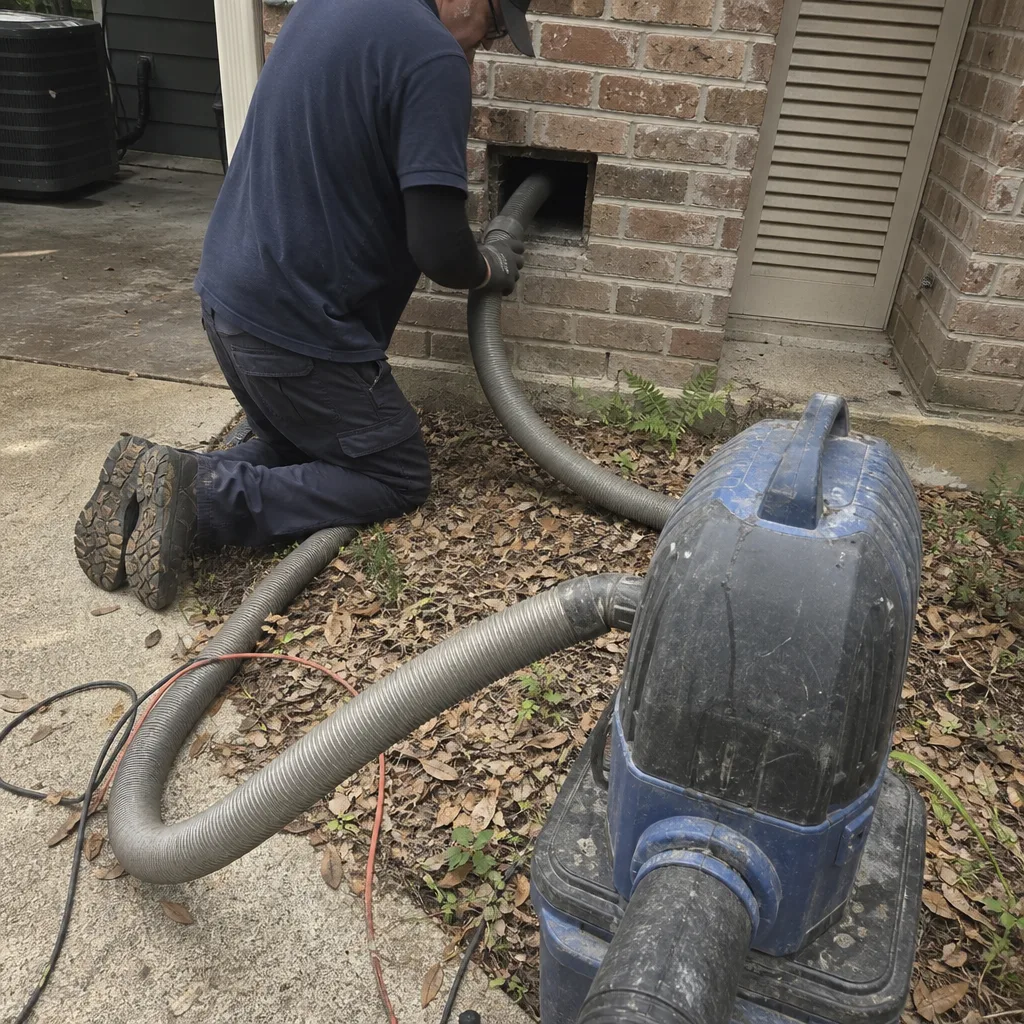 Before
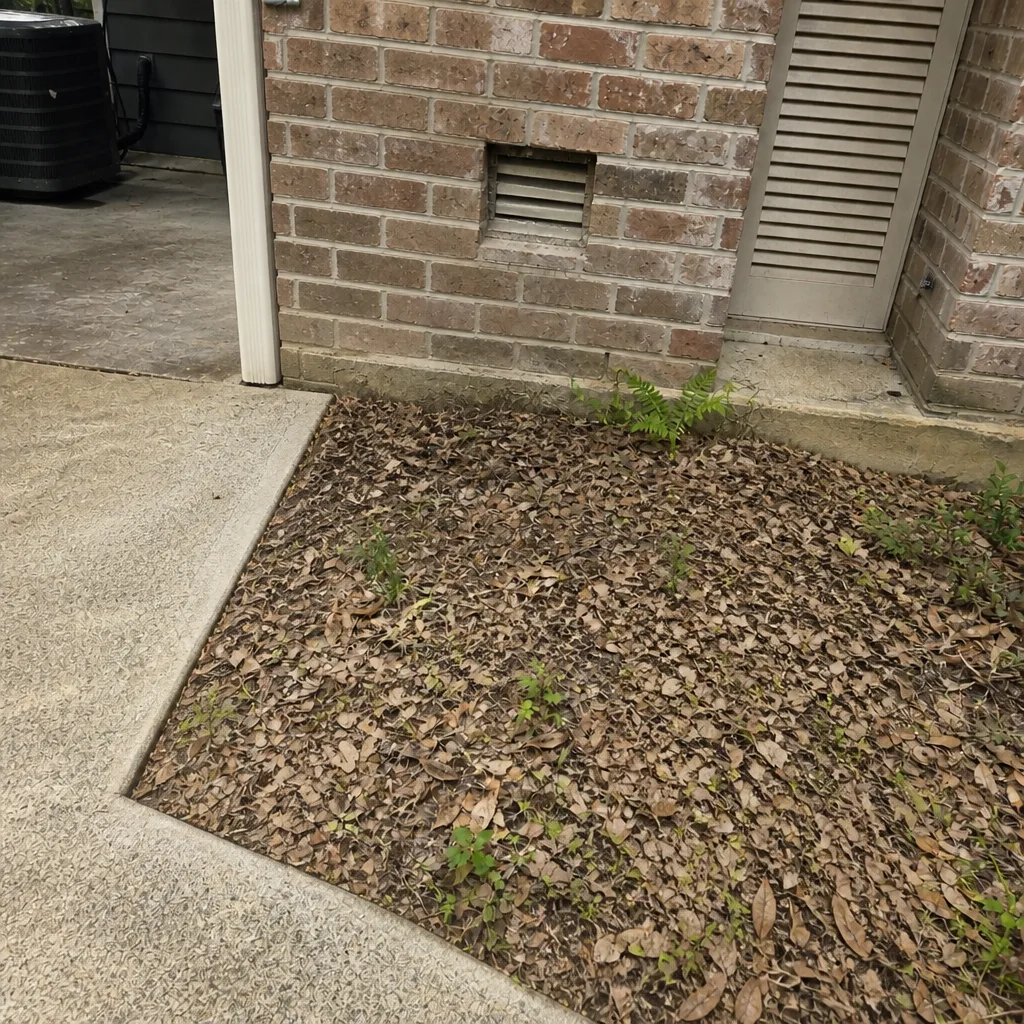 After
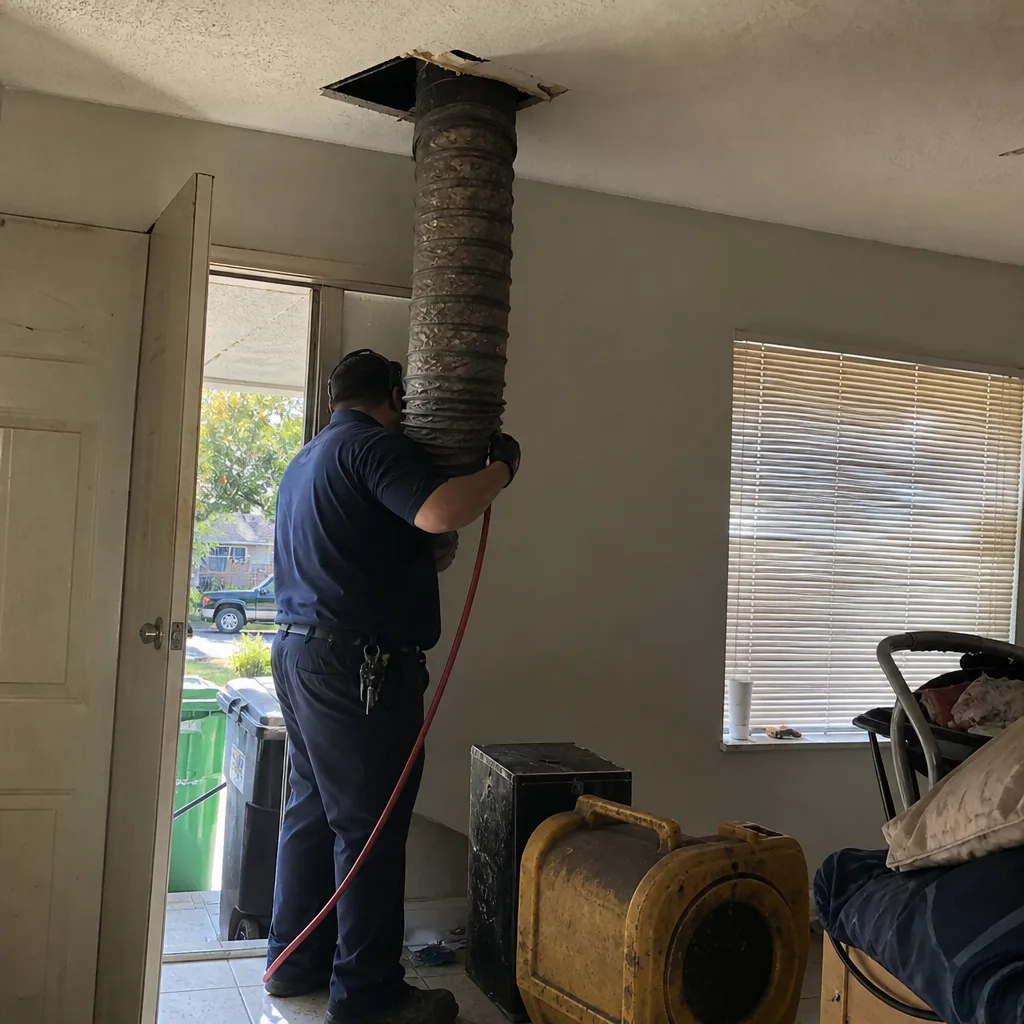 Before
 After
 Before
 After
When to Call a Professional
Call a professional if you have one or more of the following: a structural symptom (weak airflow at specific registers, visible crush or sag in the attic duct, a room that runs consistently hot), an unusual smell you can’t place or that includes a sharp or ammonia note, evidence of rodents or moisture in the attic, a recent roof leak or storm repair, or a post-cleaning problem that hasn’t resolved. Also call if you’ve never had the system inspected and your home is more than twenty years old; the original taped connections in older Beaumont homes are a predictable failure point. A free estimate from Beaumont Duct Cleaning will tell you whether you need a cleaning, a repair, or both, and you’ll get a written scope before any work starts. Call (866) 935-2761. We answer 24/7. Fast dispatch from 7am to 7pm, Sunday through Friday.
Frequently Asked Questions
Because airflow problems are usually a duct integrity problem, not a debris problem. Crushed pipe, disconnected joints, and undersized runs survive a cleaning. Ask your contractor to inspect for structural damage before quoting a cleaning.
If the smell is strongest when the system first starts and fades after a few minutes, it’s likely a duct or plenum surface with surface mildew. If it persists all day, or the drain pan or equipment is damp, the source is more likely at the air handler. A technician can pass a camera into the equipment and the trunk to sort this out quickly.
You can suspect it: weak airflow at a specific register, a room that’s persistently off, and a system that seems to run hard without delivering air. But confirming a crush requires seeing the run in the attic. Leave that to a technician.
Before-and-after video of your own ducts, a summary of runs cleaned, and a note of any damage, leaks, or sealing work observed. Ask for it in writing, and ask to see the footage before you write a check.
Most homes can go several years between cleanings, though factors like pets, renovation, recent storm damage, or a rodent issue change the interval. If you can see dust film on the register grilles or you notice the musty smell is back, it’s time to at least have it inspected.
Yes. We handle air duct cleaning, dryer vent cleaning, and air duct repair under one company, so you don’t have to call a second contractor when a run is crushed or a joint has failed. Call (866) 935-2761 for a free estimate in Beaumont.
The Bottom Line
The single most useful thing you can do before calling anyone is to sort your symptom into the right bucket. Musty odor, visible register dust, and a house-wide dust film are debris problems. Weak airflow, a cold or hot room, whistling registers, and a short-cycling system are structural problems. Cleaning fixes the first. Repair, sealing, and balancing fix the second. Get the diagnosis right, ask for before-and-after footage, and insist on a written scope before work begins. Our technicians have up to 14 years of experience diagnosing both kinds of problems. If you want a straight answer on yours, start with the drying-vent side if that’s your concern, call on dryer vent cleaning, or call us for the whole system. We serve the Beaumont area and we’re glad to walk through it with you.
Call (866) 935-2761 for a free estimate. We answer 24/7. Fast dispatch from 7am to 7pm, Sunday through Friday. Visit Beaumont Duct Cleaning to see the equipment and services in more detail.
Written by the team at Beaumont Duct Cleaning.